
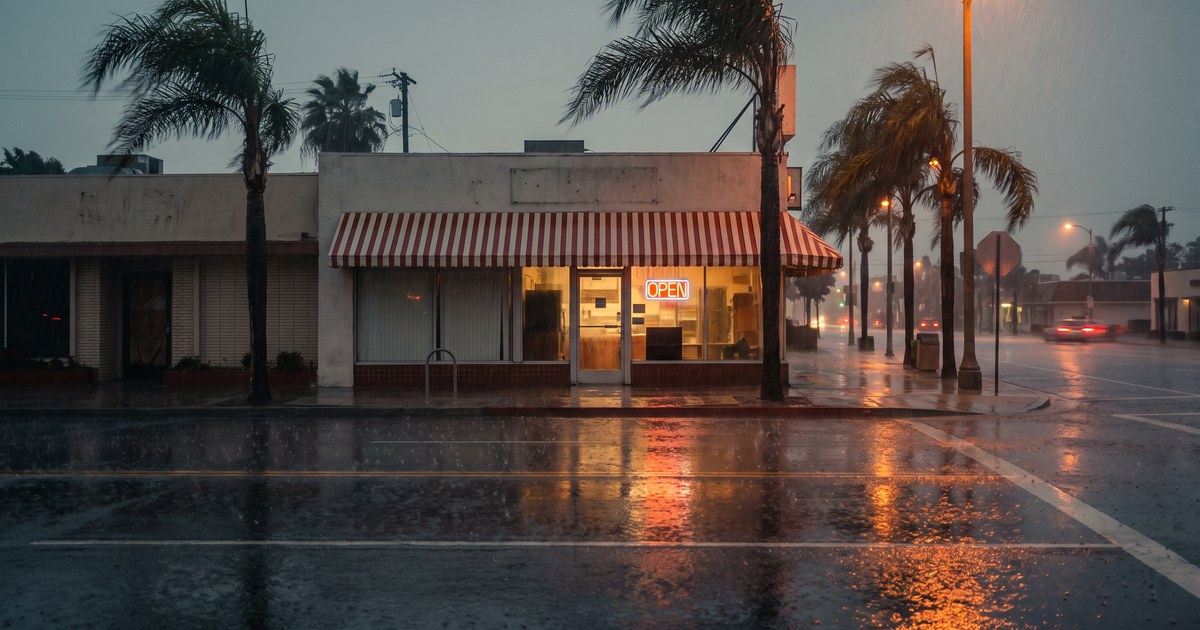
Southern California’s rain season typically runs from November through March, and after a dry fall, many LA-area business owners are shifting their attention from Halloween displays to storm prep. A few inches of rain a year might sound minor compared to other parts of the country, but a single atmospheric river event can shut down foot traffic for a day, flood a stockroom, or knock out power across a commercial corridor anywhere from Van Nuys to West Covina.
For small business owners across Los Angeles, the San Fernando Valley, the San Gabriel Valley, and the Santa Clarita Valley, a little preparation now can prevent a lot of lost revenue later. Here’s where many local owners are focusing their attention this month.
Start with the roof and the drains. Flat commercial roofs are common across LA strip malls and older storefronts, and clogged drains are one of the most common causes of interior water damage during the first big storm of the season. A fast, cheap fix: walk the perimeter now and clear leaves and debris before the first real rain hits.
Check your business insurance for flood and water-damage coverage specifically. Standard commercial property policies don’t always cover flooding, and many owners don’t find that out until after a loss. A quick call to your broker this month is worth the ten minutes it takes.
Protect your point-of-sale and back-office equipment. Surge protectors, a battery backup for registers and card readers, and a plan for taking sales on a phone or tablet if the power drops can keep a slow, rainy Tuesday from turning into a lost day of sales entirely.
Communicate proactively with customers. Rainy days change foot traffic patterns everywhere, but especially along car-dependent corridors. A quick social post or Google Business Profile update noting you’re “open as usual despite the rain,” or sharing adjusted hours if a storm turns serious, helps customers decide whether to make the trip.
Look at your supply chain, too. Deliveries tied to outdoor markets, farmers’ market vendors, or anyone relying on street-level loading zones should build in a buffer during storm weeks, since street flooding and parking restrictions can delay shipments across the region.
None of this requires a big budget — just an afternoon of walking the property and a few phone calls. Doing it before the first serious storm, rather than after, is what separates a minor inconvenience from a costly closure.
Are you a local business owner? Add your business listing on Los Angeles Business Web today.